You don't need a gym membership or a room full of machines to build a strong heart and lungs. With a jump rope, a bike or rower, or just your bodyweight, HIIT workouts at home can be short, effective and fun. The trick is knowing when to push, when to keep it easy, and how to balance both without burning out. This guide explains the essentials, compares popular cardio equipment, and gives you four complete workouts to start today.
HIIT vs Steady-State Cardio: What Each One Does
Cardio training falls on a spectrum. At one end is steady-state cardio: a brisk walk, easy ride or relaxed row you can sustain for 30–60 minutes. At the other is high-intensity interval training (HIIT): short bursts of very hard effort separated by rest or easy movement.
Steady-state and "zone 2" training
Zone 2 is a popular name for easy, conversational cardio: you're breathing a little harder than normal but could still chat in full sentences. It builds your aerobic base, improving your heart's ability to pump blood and your muscles' ability to use oxygen, and it supports recovery between harder sessions. Because it's gentle on joints and the nervous system, you can do a lot of it without feeling wrecked.
HIIT
HIIT pushes you well above that comfortable level for 10 seconds to 4 minutes at a time. Hard intervals raise your top-end fitness and deliver a lot of training in little time. The trade-off is recovery cost: HIIT is harder on joints if it involves jumping, and doing it daily is a fast route to stalled progress, poor sleep and nagging aches.
Rule of thumb: keep the easy days truly easy so the hard days can be truly hard.
How Much Cardio You Need and How to Balance It Each Week
General public-health activity guidelines for adults recommend roughly 150–300 minutes of moderate-intensity activity per week, or 75–150 minutes of vigorous activity, or a combination (one vigorous minute counts roughly like two moderate minutes). They also recommend strength work on at least two days per week, so cardio should complement a program like our beginner full-body home workout plan, not replace it.
A practical split is to keep about 75–80% of your cardio easy and the rest moderately hard to very hard. Here's how that might look:
| Day | Beginner (about 150 min/week) | Intermediate (about 200–250 min/week) |
|---|---|---|
| Monday | Strength training + 10-min easy walk | Strength training + 15-min zone 2 bike |
| Tuesday | 30-min brisk walk or easy bike | HIIT session (20–25 min including warm-up) |
| Wednesday | Beginner bodyweight intervals (20 min) | Strength training |
| Thursday | Rest or gentle mobility | 45-min zone 2 row, bike or walk |
| Friday | Strength training + 10-min easy walk | Strength training + short jump-rope finisher |
| Saturday | 40-min walk, hike or easy ride | 60-min easy outdoor activity or long zone 2 session |
| Sunday | Rest | Rest or light mobility work |
Even the intermediate plan has only one or two dedicated HIIT sessions. If you're also lifting hard, that's plenty for most people.
Heart-Rate Zones, the Talk Test and RPE
To train at the right intensity, you need a way to measure effort. You have three good options, and they work well together.
- Heart-rate zones are percentages of your maximum heart rate. The classic estimate of 220 minus your age is only a rough starting point, since real maximums vary a lot. Chest straps track fast interval changes better than wrist sensors.
- The talk test needs no gadgets: full sentences means easy, short phrases means moderately hard, and a word or two means vigorous.
- Rate of perceived exertion (RPE) rates effort from 1 (barely moving) to 10 (absolute maximum). With practice it becomes reliable, and it automatically accounts for bad sleep, stress and heat.
| Zone | Approx. % of max HR | RPE (1–10) | Talk test | Typical use |
|---|---|---|---|---|
| Zone 1 – Very easy | 50–60% | 1–2 | Can sing or talk freely | Warm-ups, cool-downs, active recovery |
| Zone 2 – Easy aerobic | 60–70% | 3–4 | Full sentences, slightly breathy | Base-building steady-state sessions |
| Zone 3 – Moderate | 70–80% | 5–6 | Short sentences | Tempo efforts, longer intervals |
| Zone 4 – Hard | 80–90% | 7–8 | A few words at a time | Threshold intervals of 1–4 minutes |
| Zone 5 – Very hard | 90–100% | 9–10 | Can't talk | Short sprints of 10–30 seconds |
Choosing Cardio Equipment for a Home Gym
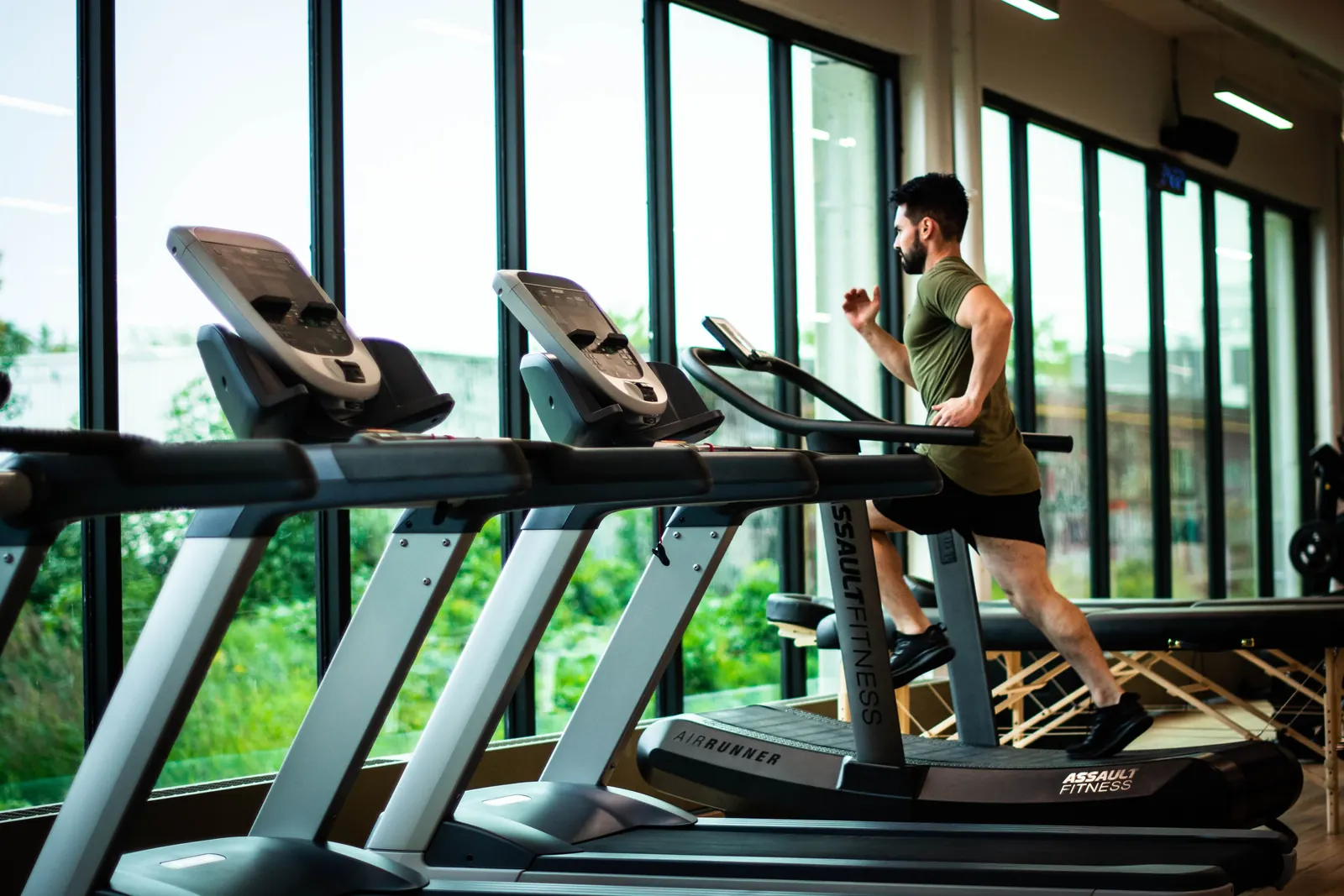
You can do excellent HIIT workouts at home with no equipment, but one well-chosen piece of gear makes low-impact intervals easier. The right choice depends on budget, floor space, noise and your joints. Planning a full setup? See our guide to building a home gym on a budget.
| Equipment | Typical cost (new) | Space needed | Noise | Impact |
|---|---|---|---|---|
| Jump rope | $10–$40 | Very low (needs ceiling height) | Low to moderate (landing thuds) | Moderate |
| Air bike (fan bike) | $300–$1,200 | About 2 × 4 ft (0.6 × 1.2 m) | Moderate to loud (fan noise) | Very low |
| Rowing machine | $250–$1,500 | About 2 × 8 ft (0.6 × 2.4 m); many fold or stand upright | Low to moderate (magnetic quietest) | Very low |
| Treadmill | $500–$3,000+ | About 3 × 6.5 ft (0.9 × 2 m) | Moderate (motor plus footfalls) | Moderate (running) to low (walking) |
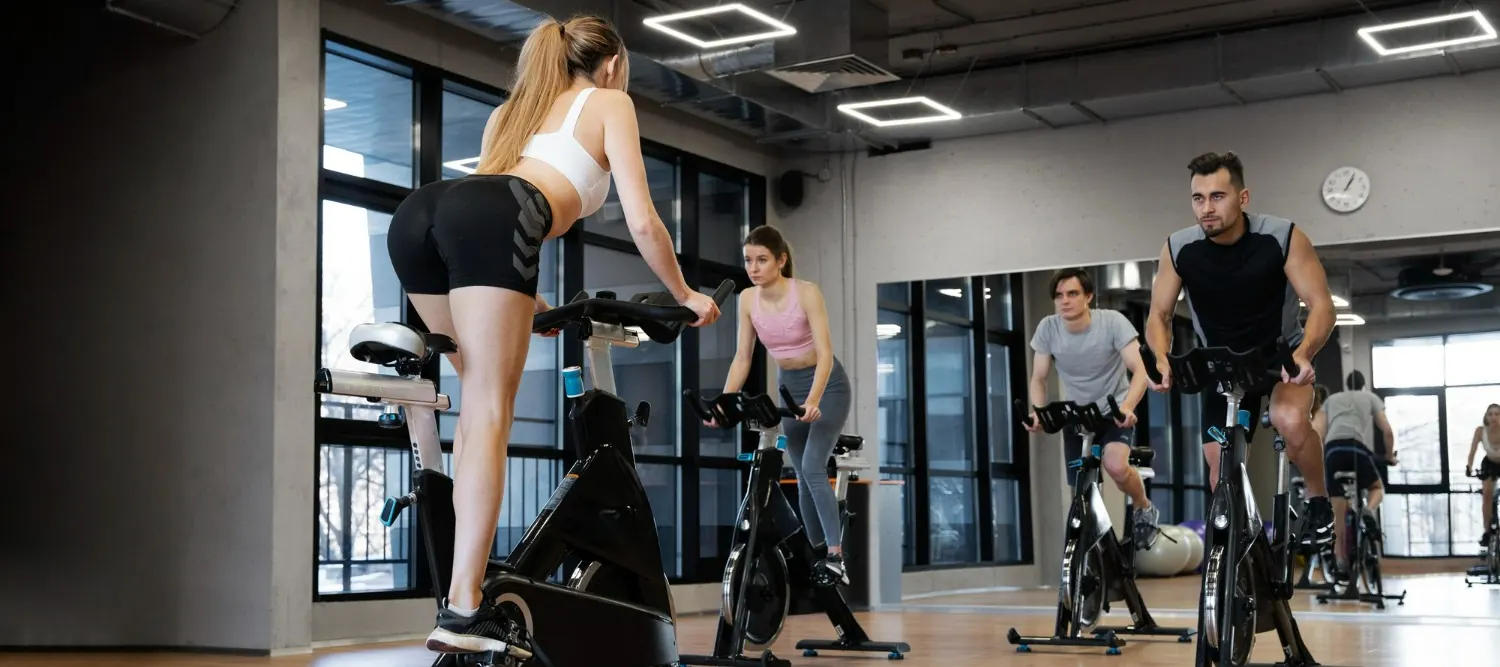
| Stationary / spin bike | $200–$1,500 | About 2 × 4 ft (0.6 × 1.2 m) | Low (magnetic resistance is near silent) | Very low |
| Battle ropes | $40–$150 plus anchor | About 3 × 15–25 ft (1 × 4.5–7.5 m), since a 30–50 ft rope folds in half at the anchor | Moderate (rope slaps) | Low |
Treat prices as broad ranges. Used rowers and spin bikes can be great deals; check that the flywheel spins smoothly and the resistance adjusts cleanly before buying.
Warm-Up and Cool-Down: Don't Skip Them
A warm-up raises body temperature and prepares joints and the nervous system for fast movement. It matters most before HIIT, because jumping straight into a sprint is when strains tend to happen.
A 7-minute warm-up for any session
- 2 minutes easy cardio or marching in place (RPE 2–3).
- 10 arm circles each direction and 10 leg swings per leg.
- 8 bodyweight squats and 6 reverse lunges per leg, slow and full range.
- 8 inchworms or hip hinges for the hamstrings and back.
- 2 minutes building effort: 30 seconds each at RPE 4, 5, 6 and 7.
Cool-down
Finish with 3–5 minutes of very easy movement until you can talk comfortably again, then stretch your calves, hips and chest if you like. Stopping abruptly after hard intervals can leave some people lightheaded. For a fuller routine, see our guide to mobility, stretching and recovery at home.
Four Complete HIIT Workouts at Home
Each workout below assumes you've done the warm-up above. Use the interval timer on our tools page so you can focus on effort instead of the clock. During "rest," keep walking or pedaling lightly rather than collapsing on the floor.
Workout 1: Beginner bodyweight intervals (about 20 minutes)
Perfect for your first few weeks. Work at RPE 6–7, which should feel challenging but controlled. Complete the circuit of four moves, rest 90 seconds, and repeat for 3 rounds total.
| Exercise | Work | Rest | Easier option | Harder option |
|---|---|---|---|---|
| Fast step-ups or stair climbs | 30 sec | 30 sec | March in place with high knees | Step-ups holding light dumbbells |
| Squat to calf raise | 30 sec | 30 sec | Squat to a chair | Squat jumps |
| Incline push-ups (hands on bench or counter) | 30 sec | 30 sec | Wall push-ups | Floor push-ups |
| Standing mountain climbers (knee drives) | 30 sec | 30 sec | Slow alternating knee raises | Floor mountain climbers |
Workout 2: Jump-rope ladder (about 15–18 minutes)
A ladder builds work time each round, then brings it back down. Stay light on the balls of your feet with small hops just high enough to clear the rope. Work rounds are RPE 7–8.
| Round | Jump | Rest |
|---|---|---|
| 1 | 30 sec | 30 sec |
| 2 | 45 sec | 30 sec |
| 3 | 60 sec | 45 sec |
| 4 | 90 sec | 60 sec |
| 5 | 60 sec | 45 sec |
| 6 | 45 sec | 30 sec |
| 7 | 30 sec (fastest round) | Cool-down |
If you trip, restart and keep the clock running. New to the rope? Practice the rhythm with shadow jumps first.

Workout 3: Bike or rower Tabata-style intervals (about 16 minutes)
The classic Tabata format is 20 seconds of all-out effort and 10 seconds of rest, repeated 8 times. We use two blocks with a long recovery between. On a rower, focus on a powerful leg drive rather than flailing with the arms.
| Segment | Duration | Effort |
|---|---|---|
| Block 1: 8 × (20 sec hard / 10 sec easy) | 4 min | RPE 8–9 on work intervals |
| Recovery | 4 min | RPE 2–3, easy spin or paddle |
| Block 2: 8 × (20 sec hard / 10 sec easy) | 4 min | RPE 8–9; try to match Block 1 |
| Cool-down | 4 min | RPE 1–2 |
Beginners can do one block, or use 20 seconds on and 40 off. Log calories or distance per block to track improvement.
Workout 4: Battle ropes and kettlebell circuit (about 20–25 minutes)
This circuit alternates upper-body rope work with lower-body kettlebell moves. Choose a kettlebell you can swing for 15 clean reps, often 8–16 kg (18–35 lb). Complete 3–4 rounds.
| Exercise | Work | Transition rest | Coaching cue |
|---|---|---|---|
| Battle rope alternating waves | 30 sec | 15 sec | Soft knees, brace your core, drive from the shoulders |
| Kettlebell swings | 12–15 reps | 15 sec | Hinge at the hips, snap them forward; arms just guide the bell |
| Battle rope double slams | 20 sec | 15 sec | Lift ropes overhead, slam down with whole-body power |
| Kettlebell goblet squats | 10 reps | 15 sec | Chest tall, elbows inside knees at the bottom |
| Battle rope side-to-side waves | 30 sec | 2 min (end of round) | Move ropes like windshield wipers, keep hips square |

Want intervals matched to your fitness level?
Our 1-on-1 online coaching builds a cardio and strength plan around your equipment, schedule and goals, with weekly check-ins.
Quiet, Apartment-Friendly Cardio Options
Thin floors and downstairs neighbors are real constraints, but plenty of effective cardio is quiet. The key is removing jumps and choosing quiet resistance.
- Magnetic spin or recumbent bike: near-silent, even for hard intervals at night.
- Magnetic or water rower: magnetic is quietest; water rowers make a gentle swoosh.
- Low-impact bodyweight circuits: fast step-ups, hop-free skaters, speed squats, standing mountain climbers and bear crawls.
- Shadowboxing: fast punch combinations push your heart rate high with no landing noise.
- Kettlebell work on a thick mat: quiet as long as you set the bell down gently.
If you love the rope, jump on a dense rubber or horse-stall mat during daytime hours, or try a ropeless trainer with weighted handles.
How to Progress and Stay Safe
Progress one variable at a time
Your body adapts to cardio just as it does to lifting, so increase the challenge gradually. Change one thing at a time and hold it for a week or two. You can progress by:
- Adding rounds: 3 rounds become 4.
- Lengthening work: 30 seconds becomes 40, same rest.
- Shortening rest: 60 seconds becomes 45.
- Raising output: more calories or distance in the same time.
- Adding easy volume: extend zone 2 sessions by 5–10 minutes.
Increase total weekly cardio time by no more than about 10% per week, and take an easier week every 4–6 weeks. Fueling matters too; see our guide to nutrition for home workouts.
Weekly HIIT checklist
- Completed a 5–10 minute warm-up before every hard session
- Limited true HIIT to one to three sessions this week
- Kept at least one full day between HIIT sessions
- Made most cardio minutes easy and conversational
- Logged intervals, rounds or output to track progress
- Slept well and felt recovered before hard days
- Stopped any set where form broke down or pain appeared
Who should check with a doctor first
High-intensity intervals place real demands on your heart and blood vessels. Talk with a doctor before starting HIIT if:
- You have a heart condition, high blood pressure, diabetes, or lung disease such as asthma or COPD.
- You've had chest pain, fainting, unexplained breathlessness or an irregular heartbeat.
- You're pregnant or recently postpartum.
- You've been inactive for a long time or are recovering from surgery or injury.
- You take medication that affects heart rate or blood pressure (which also makes heart-rate zones unreliable).
Frequently Asked Questions
How many times a week should I do HIIT workouts at home?
For most people, one to three HIIT sessions per week is ideal, with at least one easier day between them. Beginners should start with one session per week and build from there. Fill the rest of your cardio time with easy, conversational activity such as walking or zone 2 cycling.
Is HIIT or steady-state cardio better for fat loss?
Both help, because fat loss is driven mainly by overall energy balance. HIIT burns a lot in a short session; steady-state is easier to recover from and can be done more often. The best choice is the mix you'll stick with, paired with sensible nutrition and strength training.
Can I do HIIT every day?
It's not recommended. Your body needs time to adapt between hard sessions, and daily HIIT often leads to fatigue, poor sleep and stalled progress. If you want to move every day, alternate hard days with easy cardio, strength work or mobility.
What's the best single piece of cardio equipment for a small apartment?
A magnetic spin bike is usually the best all-round choice: quiet, compact and good for both easy rides and hard intervals. On a tight budget, a jump rope plus a thick rubber mat works if you have the ceiling height.
How do I know if I'm working hard enough during intervals?
Hard intervals should feel like 7–9 out of 10 on the RPE scale, where you can only say a word or two. If you could chat during work intervals, add speed or resistance; if your form falls apart before the last round, ease off slightly.

Alex designs AWSA's strength programs and equipment guides. He has spent more than a decade coaching beginners and busy professionals to train safely with whatever equipment fits their home.